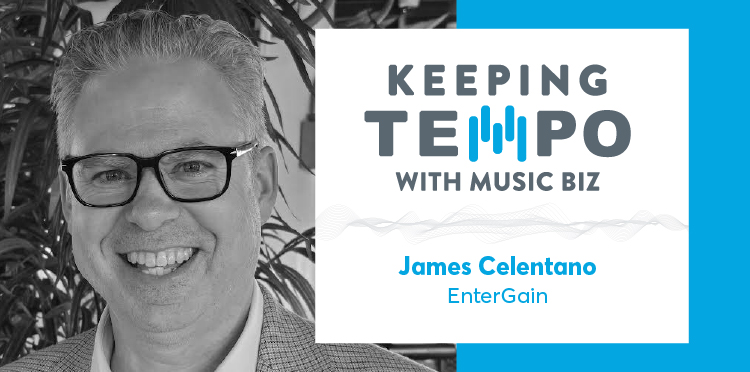
[Keeping Tempo With Music Biz] — Easy Prompts for Your Team, So They Can Make the Best Use of AI: Op-Ed from EnterGain’s James Celentano
Remember when Amazon and eBay ushered in a world of unlimited shelf space. Then with MySpace, the first floodgates of user-generated content were opened. Users could put up as much stuff as they wanted, limited only by the speed at which they could create products and content. Prior to that, sellers were limited by the amount of shelf space available in stores or catalogs.
We have entered a new paradigm: we’re moving from unlimited shelf space to unlimited inventory. AI has enabled the creation of content for a single user, and single use, informed by a trove of data, and served up in a moment’s notice. The roots of this have been around for years in dynamic feeds in your social media where what you see in your account is specific to you in that moment. But your dynamic social media feed relied on the limited content that actual users loaded on the platform. That’s changing fast. You’ll be seeing more and more content created by AI, only for you, never to be seen again.
It’s not just AI creating words, music and videos — it is also physical products. AI front-ends are being used to create made-to-order products. Look at the platform OpenWav as just one example; artists set up accounts and use AI tools to compose designs, and fans come to the platform to buy a one-of-a-kind made-to-order hoodie “designed” by their favorite artist. It’s the ultimate in fashion risk mitigation: no more worrying about showing up to the club in the same streetwear as your bestie.
It’s important that as you prompt AI to take advantage of its capabilities, that you also prompt the individuals and teams in your organization to do so in a way that aligns with your company values, mission and vision.
It’s the ultimate in one-to-one marketing, right? Two things could happen: What we don’t know yet is whether individualized content, products and services will make them more bespoke and more valuable, or if it will make them more pervasive, disposable and therefore less valuable. Will content and things made custom by AI cause human and factory-made things to become more special or less special? It is hard to predict. In the early 2000s when the audio CD format was in decline in the face of downloads and piracy, no one anticipated the level to which vinyl records would make the comeback we’ve seen over the past decade. In a world where more of the emails you receive are composed by AI, will a short email written well by a human become the new handwritten note? Will the onslaught of AI slop be the processed food that makes organic food and farm-to-table restaurants more attractive, special and expensive?
A People-First Approach to AI
Your company might be AI based, or you might be finding ways to use AI to drive efficiency or innovation in your traditional business. Either way, you’ll benefit from thinking through your company’s relationship with AI. What steps is your company taking to understand where your customers want these unique experiences? How will you ensure that your use of AI stays on brand? What will you do to meet the needs of customers who still seek a shared experience and a sense of community? How do you set guidelines so your team’s use of AI aligns with your company values, mission and vision?
Artificial Ignorance: Hey, Human, You’re Smarter Than That!
For many writers, AI is better at spelling, grammar, sentence structure and so forth. But is that giving us a false sense of quality control? AI is making content so fast, and so well, that the person prompting it may become complacent, and not QC it with the attention they used when they wrote and proofread missives themselves, to ensure it has the level of thought, logic, message and impact that meets their personal and professional standards. And the reader on the other end, suspecting the sender relied too heavily on AI, only pays it partial attention. It risks leading to disposable, single-use content and communication that no one takes seriously. Yes, use AI, but don’t set it and forget it; it’s important to keep a human eye on it.
What’s a Leader To Do?
At EnterGain, we spend 70% of our time in the music ecosystem and have worked with companies in every facet of the music industry, from booking agencies to rights organizations, and record labels to DSPs. Music is often the canary in the coal mine when it comes to technology, whether tech comes in the form of disruptor or collaborator. And we work across many other sectors including fashion, consumer, entertainment, healthcare, education and more where our insights about disruption enable our clients to see around corners. EnterGain works with companies in filling key roles, upskilling teams on leadership and communication skills, and partnering with boards and the C-Suite to align whole organizations around strategy starting with values, mission and vision. We can say firsthand that the fast-moving avalanche of AI does not have to be daunting. In your approach to AI, simply start with your company values.
- Have your company leaders issued statements that connect the company’s long-held values on how to best apply AI?
- Has the company provided guidance on how AI can and should be used in an individual’s day-to-day work?
- Has the company specified what parts of the business are a target for AI?
- Are there aspects of your business – in order to maintain the company’s values, mission and vision – that need to remain AI free?
- Do individual job descriptions indicate the specific areas where AI can be used?
- Are employees educated on the risks that AI presents, how to spot concerns, and where to report them?
- Have you identified the most thought-leading AI advocates in your organization, regardless of their level or status in the organization? Has leadership set up forums where those innovators can speak freely, and where leadership fully listens?
- Have you formed a committee to review, apply and iterate the use of emerging AI at the company? Is that committee balanced with people who also keep an eye on compliance, ethics and quality?
These are some of the prompts we are offering to humans in our strategy work, before they throw a string of prompts at AI.
A Word About Authorship
Make no mistake: I am excited about AI. I use it every day. I did not use it for this article. And in these early days of AI, it is important for us all to remind each other that property rights matter. From the creators behind the copyrights of the songs you listen to, to the scientists behind the patents on the prescription drugs that keep you alive, to your own likeness that the TSA scans as you pass through security at the airport – property belongs to its rightful owner. Just as AI tool makers want to be able to protect their code and inventions, the authors and owners of the content and property that AI tools train on deserve consent, credit and compensation. “Hey AI, you do not have permission to train on this article!” If only it was that easy. We’re seeing makers of AI tools do amazing things. I’m confident that sorting out the three C’s on training is in their wheelhouse too. And I know there are plenty of principled people in the senior ranks of these companies to wave the flag and say, hey, let’s make AI tools that are IP-friendly and sustainable for everyone.
By James Celentano, Co-Founder, EnterGain — Celentano advises boards, founders, c-suite execs and deans on hiring, upskilling and strategy.
You can read past Keeping Tempo’ articles via the portal linked here. And, stay tuned for more insightful discussions from our members and partners from across the industry!